Week 4: Medicine + Technology + Art
I am interested in the ways that advancement in technology has enabled medical research and breakthrough. I was particularly interested in the Human Microbiome Project, a work that followed the Human Genome Project. I was astounded to learn from Professor Vesna's first lecture video that we have 10 times more bacteria than cells in our body! (11:49-12:01). I was already aware that we had millions of bacteria in our body, mainly because of learning from my doctor. During a period of having some health issues, my doctor discussed my gut microbiome with me and explained how essential it is for so many other aspects of health and fighting off disease. Reflecting on this experience has allowed me to better understand how a work like the Human Microbiome Project can be world-changing in its efforts to help people lead healthier lives. All of these discoveries are due to advancements in technology, and without computers, genetic sequencing for either of the projects discussed would not be possible.
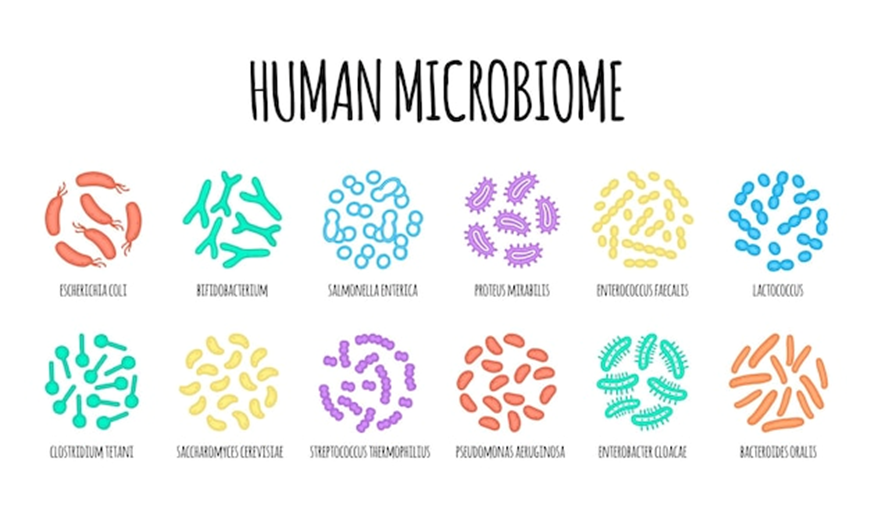
Microbiomes cataloged by the HMP
I am also fascinated by how animation is able to increase our understanding of medicine and the human body, which I found most noticeable in the "Body Code" video. Watching the complexity of messages being sent through stem cells to your immune system was amazing, and it is not hard to see why artists are inspired by anatomy-- even at the molecular level. These animations are a beautiful combination of art and science. Many have also noted that certain molecular structures resemble various types of art in the world, such as T-cells looking almost like stained glass.


Reflecting on my own experience with health and medicinal technology has made me very grateful for all the advancements that have been made. It is inspiring to see the ways that medicine, technology, and art develop, evolve, and improve together.
References
1. Berry, Drew. “Body Code.” WEHI, 2003, www.wehi.edu.au/wehi-tv/body-code-2/.
2. “NIH Human Microbiome Project - Home.” Hmpdacc.org, 2019, hmpdacc.org.
3. Shreiner, Andrew B., et al. “The Gut Microbiome in Health and in Disease.” Current Opinion in Gastroenterology, vol. 31, no. 1, Jan. 2015, pp. 69–75, https://doi.org/10.1097/mog.0000000000000139.
4. Turnbaugh, Peter. “The Human Microbiome Project.” Nature, 17 Oct. 2007, www.nature.com/articles/nature06244.
5. Vesna, Victoria. DESMA 9: Lecture #1- "Human Body and Medical Technologies"
Images
1. Khursel, Eklavya. “Exploring the Hidden Universe Within: Unraveling the Mysteries of the Human
Microbiome Project.” Medium, 18 Oct. 2023, medium.com/@eklavyakhursel/exploring-the-hidden-
universe-within-unraveling-the-mysteries-of-the-human-microbiome-project-4ee10c8c914e.
2. Berry, Drew. “Body Code.” WEHI, 2003, www.wehi.edu.au/wehi-tv/body-code-2/.
3. Neves, Sonia Furtado. “Know Your Cells.” EMBL, 3 Aug. 2015, www.embl.org/news/science/1508_t-
cells/. Accessed 25 Apr. 2024.
Im

Hi Jessica, great job on your blog this week! It was interesting to learn that there is a human microbiome project that is ongoing, as I never knew this existed. I personally see how technological advances contribute to medicine and discovery as I also work with biological data. I think that it is fascinating how a lot of medicine and the human body are similar to artistic works people create as it just shows how connected art, technology, and medicine really are.
ReplyDelete